DESIGNING GOLF LE FLEUR EXPRESS: FROM MOODBOARDS TO MOTION
Creative Process
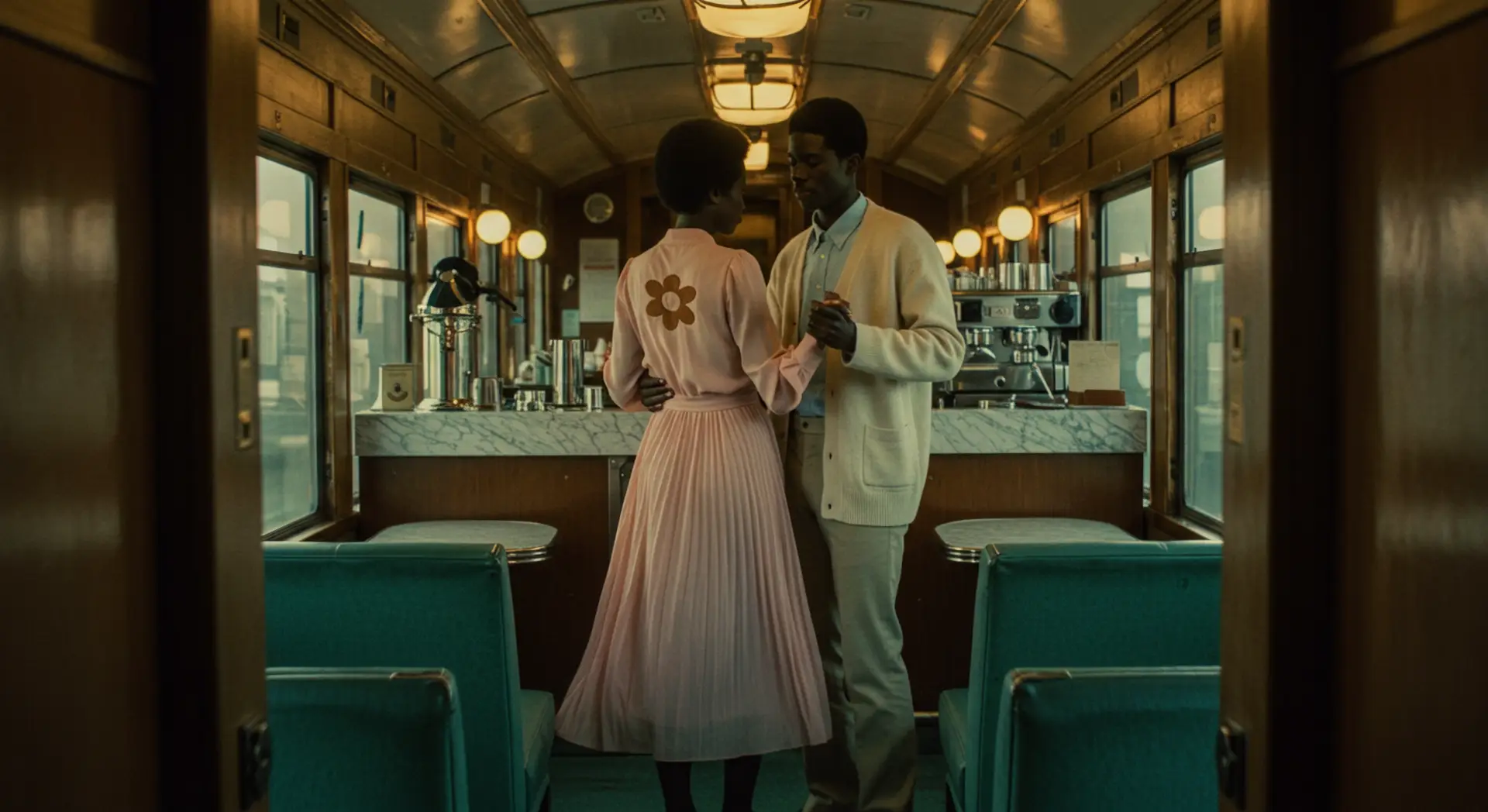
It started with a feeling — warm wood, soft light, floral branding, emotional stillness.
It became a fake campaign. But the process was anything but artificial.
Golf le Fleur Express is a visual mythology project that combines nostalgia, fashion, and motion through artificial intelligence and narrative design. A train, a brand, and a story that exists somewhere between memory and dream.
FROM SCRIPT TO VISUAL WORLD
The journey began with a mini-script: a loose narrative arc, imagined in fragments.
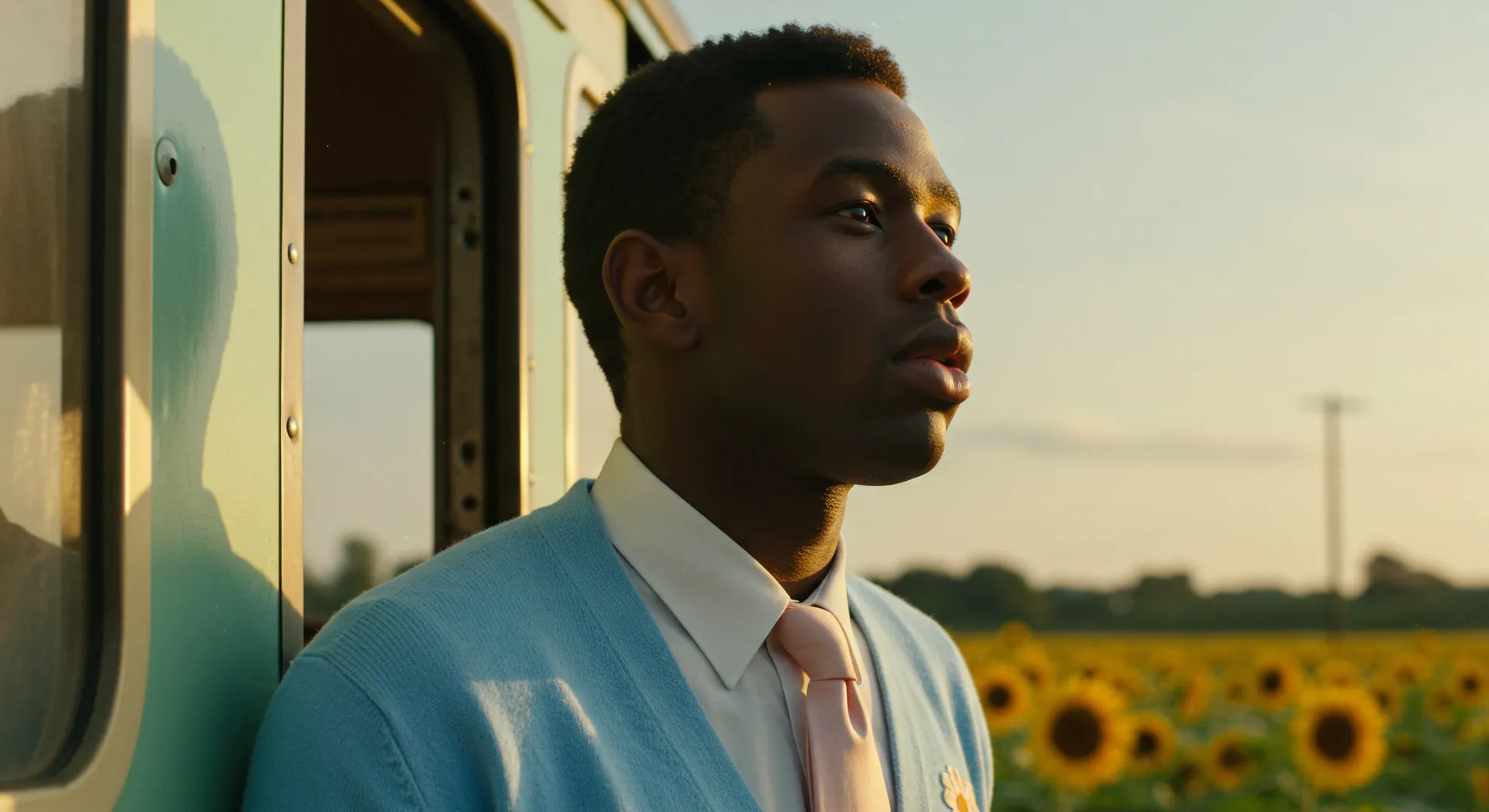
No words, just scenes — Tyler entering the train, two strangers exchanging a look, the clink of golden cutlery, sun fading behind fields of sunflowers.
From there, I built a FigJam board, combining emotional cues, reference frames, color swatches and recurring motifs.
Then, I brought it into Midjourney — where each scene was turned into visual prompts to begin crafting the world.
AESTHETIC REFERENCES: PHOTOGRAPHY, FILM & DESIGN
Cinematic language:
• The Darjeeling Limited (Wes Anderson) for composition, color and symmetry. • Call Me If You Get Lost (visuals by Tyler & Luis "Panch" Perez) for tone, humor, and color temperature. • In the Mood for Love (Wong Kar-wai) for pacing and silent emotion. • Moonrise Kingdom + The Grand Budapest Hotel for props, mise-en-scène and slow movement.
Photographers:
• Jamie Hawkesworth (texture and lighting) • Thibaut Grevet (composition, masculinity and melancholy) • Carlota Guerrero (emotion through gesture)
Furniture & Interiors:
• 1970s European trains (Italian and French lines) • Bentwood chairs, brass luggage racks, velvet curtains • Pale mint upholstery, walnut wall panels, frosted glass • Everything designed to feel tactile, curated, and lived in
SYMBOLS & CODES: TYLER'S UNIVERSE
The Five-Petal Flower
• Tyler's iconic Golf le Fleur logo appears across mugs, napkins, buttons, uniforms, and luggage tags • Not used for branding — used as identity, like a scent that lingers across scenes
The Dogs — Bedlington Terriers
• Elegant, calm, and stylized • A direct reference to Tyler's own use of this breed in fashion and video work • They become still companions, almost part of the set — loyal, soft, surreal
Luggage as Narrative Artifact
• Pastel-toned, leather suitcases evoke Call Me If You Get Lost • Some are tagged with floral emblems • One is slightly open with fabric and a book — as if packed by someone poetic, not practical
Dining Scenes as Design Rituals
• White porcelain with flower motifs • Gold flatware, pastel trays and folded napkins embroidered with symbols • Everything feels like a still life, styled like a Golf product shoot but lived-in
Windows & Nature as Controlled Fantasy
• Surreal sunflower fields and white skies pass behind the train • Landscape is reduced to color and texture — a moving diorama • This mirrors Tyler's crafted relationship with nature: stylized, staged, symbolic
Interior Design & Fabric Codes
• 1970s European luxury: walnut walls, brass fixtures, mint and sage green upholstery • Pastel velvet seats, golden curtain details, aged chrome • The train feels both archival and fantastical — like the inside of a memory
Everyday Objects as Icons
• Soap on a tray • Brushes and bottles with minimal labels • Uniform details: collars, stitching, gloves — each shot like a product campaign, but used in a story
Silhouettes, Poses, Sunglasses
• Characters wear oversized pastel suits — classic Golf le Fleur tailoring • Sunglasses inside the train — anonymity as fashion • Never looking at camera, always placed with intention, like portraits in motion
Floral Presence Beyond Decoration
• Flowers are everywhere — centerpieces, fabric patterns, logos • But they never feel ornamental. They feel embedded into the world, as part of the visual DNA
Color, Texture & Composition
• Soft pastels, hazy warmth, analog imperfections • Kodak Portra-inspired palettes, natural grain, symmetrical frames • Every image feels like a cross between a fashion editorial and a memory reconstruction
CRAFTING 1 IMAGE ≠ 1 CLICK
To build a coherent cinematic world, I needed more than just good prompts.
I needed control, direction, and iteration.
Each of the ~800 final images was the result of at least 15–20 previous versions, discarded due to anatomy flaws, lighting errors, broken logos or emotional disconnect.
Which means that, conservatively, I generated somewhere between 12,000 and 16,000 images to complete this project.
FROM STILL TO MOTION
Once the visual world was in place, I moved to Kling to animate the scenes.
But this wasn't automatic — I manually directed camera moves: slow dolly-ins, lateral pans, match cuts between doors and windows.
Some clips distorted the image. Some misunderstood the space.
Dozens of tests failed before finding a rhythm that felt cinematic rather than artificial.
I polished details in Photoshop — cleaning hands, fixing text, smoothing shadows — and finally color graded the entire video in DaVinci Resolve, adding grain, softness and warmth.
WHY THIS PROJECT MATTERS
This wasn't about faking a campaign.
It was about proving that emotion and meaning can survive — and even thrive — in the era of artificial tools.
Golf le Fleur Express is a visual experiment, yes. But it's also a manifesto:
You don't need to wait for a client, a budget or a production team to create something iconic.
If you have a clear idea, a sharp eye, and the patience to build something layer by layer — then even an imaginary train can carry real emotion.
by MITO,
31.03.2025